Built for search
Every page ships structured data for the practice, the physician, and the clinic hours, plus a sitemap and robots rules. Search engines get told exactly what the practice is, not left to guess.
Client results · Healing Acupuncture
A real two location practice. I built the website and the booking system behind it, so patients who call after the desk closes get booked instead of hitting voicemail.
Client
Healing Acupuncture and Wellness
Dr. Jennifer Yen
Locations
Rockville and Clarksburg, MD
Two clinics, one calendar system
Coverage
24/7 automated
Since launch
The practice runs two clinics, one in Rockville and one in Clarksburg. The front desk works business hours. Patients call after 5pm and on weekends, and those calls went to voicemail.
A patient who reaches voicemail is a patient who can still book with someone else before morning. The obvious fix is a second front desk hire. At $18 an hour, full time, that is $3,900 a month per location once payroll taxes, benefits, and PTO are loaded in, and it still only covers 40 of the 168 hours in a week. For two locations, that math never worked.
The build
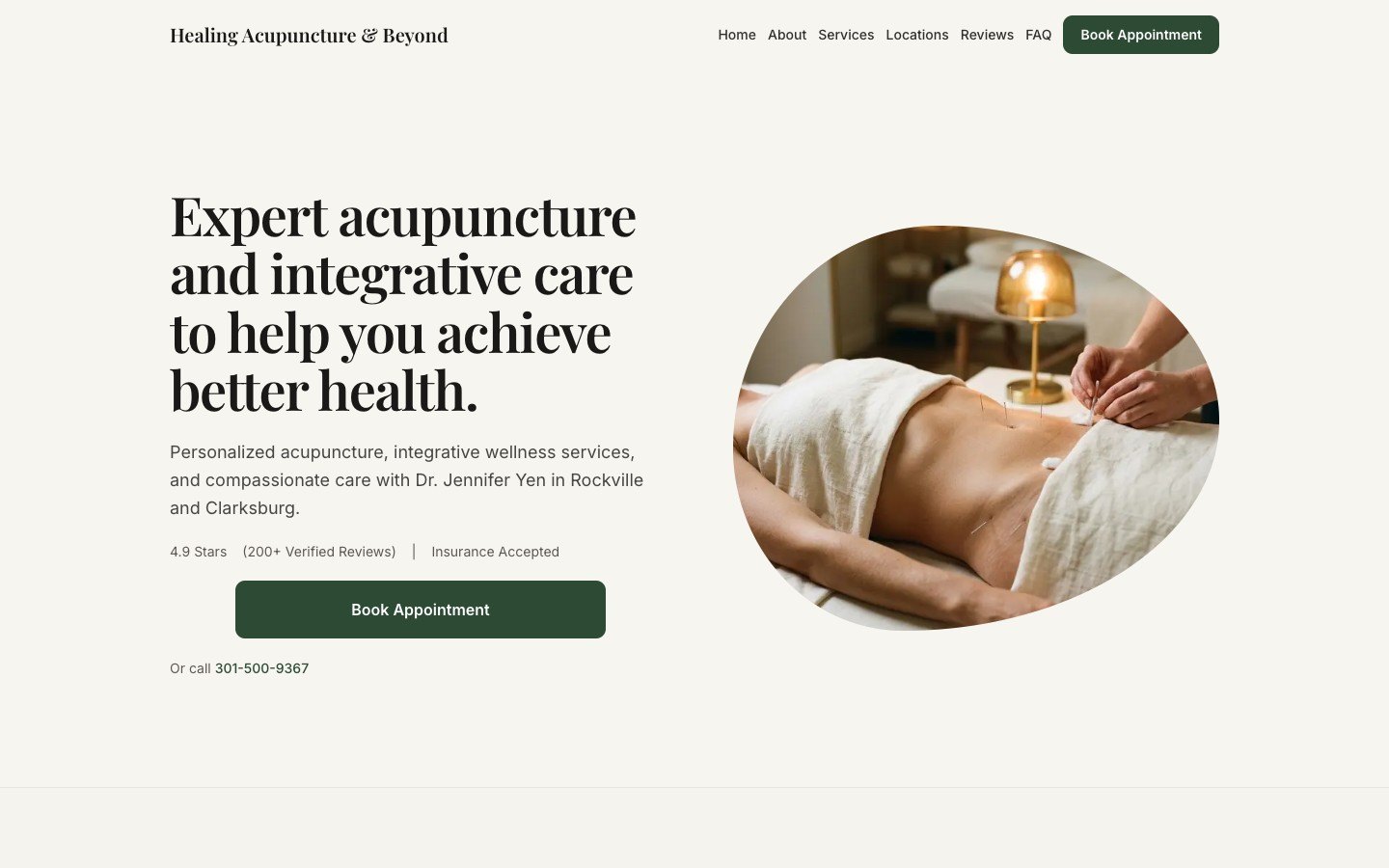
The practice needed a site that could be found, answer questions on its own, and turn a visit into a booking. So the site is built for search engines, answer engines, and local discovery from the ground up, not bolted on afterwards.
Every page ships structured data for the practice, the physician, and the clinic hours, plus a sitemap and robots rules. Search engines get told exactly what the practice is, not left to guess.
The FAQ is marked up as real question and answer data, so an assistant that gets asked about the practice can quote it directly instead of paraphrasing a paragraph.
Both clinics carry their own address, hours, and parking details as local business data, so Rockville and Clarksburg can surface independently for nearby searches.
Each service gets its own page and its own metadata rather than one long list, so a specific treatment can rank and answer on its own terms.
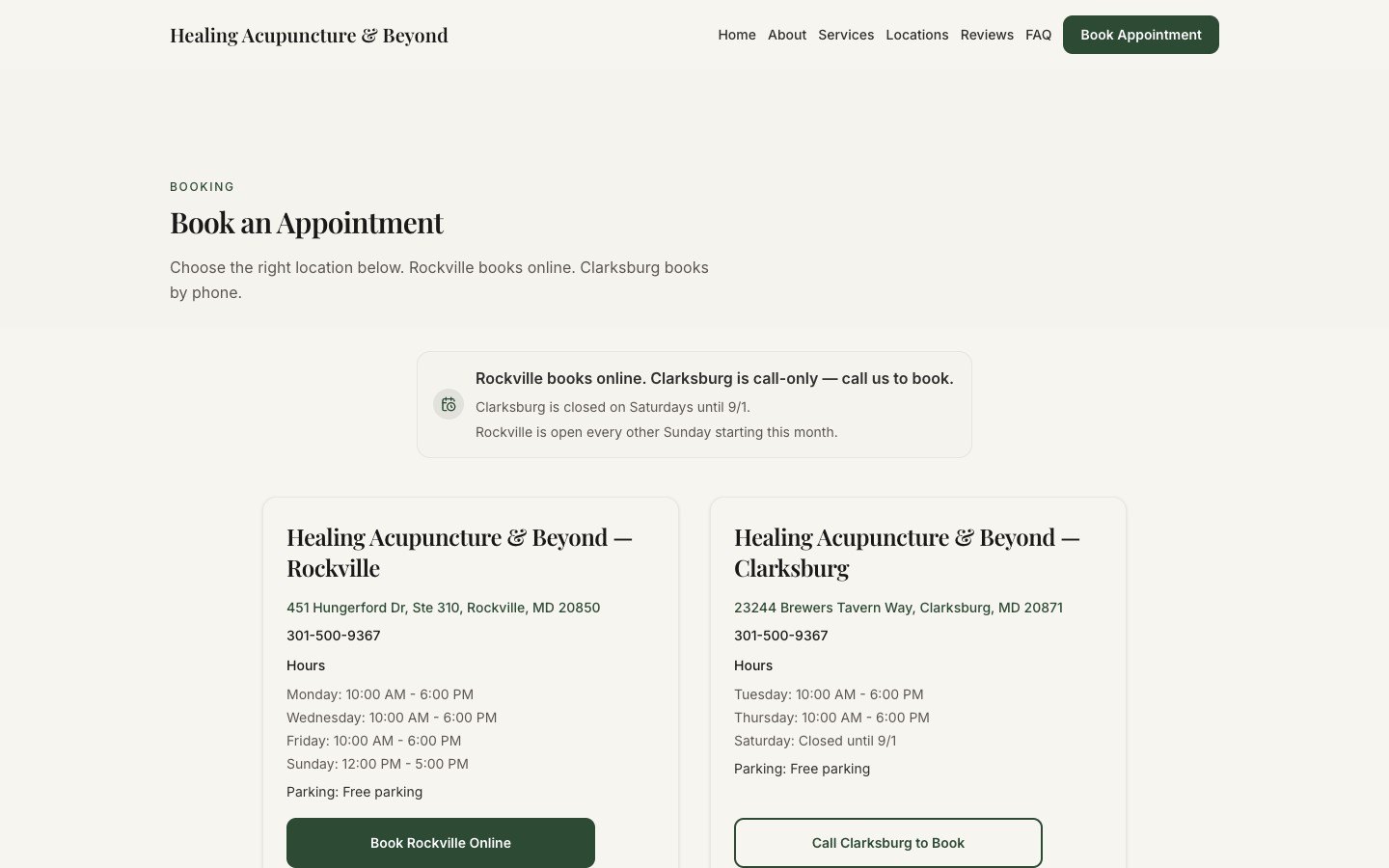
What the site ships with
The Operator books, qualifies, and confirms patients 24 hours a day across both locations. It is connected to the real calendar the practice already uses, so a booking is an actual appointment on the schedule, not a message waiting for a callback.
Every action it takes is logged with a verifiable record. The staff workflow did not change. The front desk walked in each morning to a fuller calendar, not a new tool to learn.
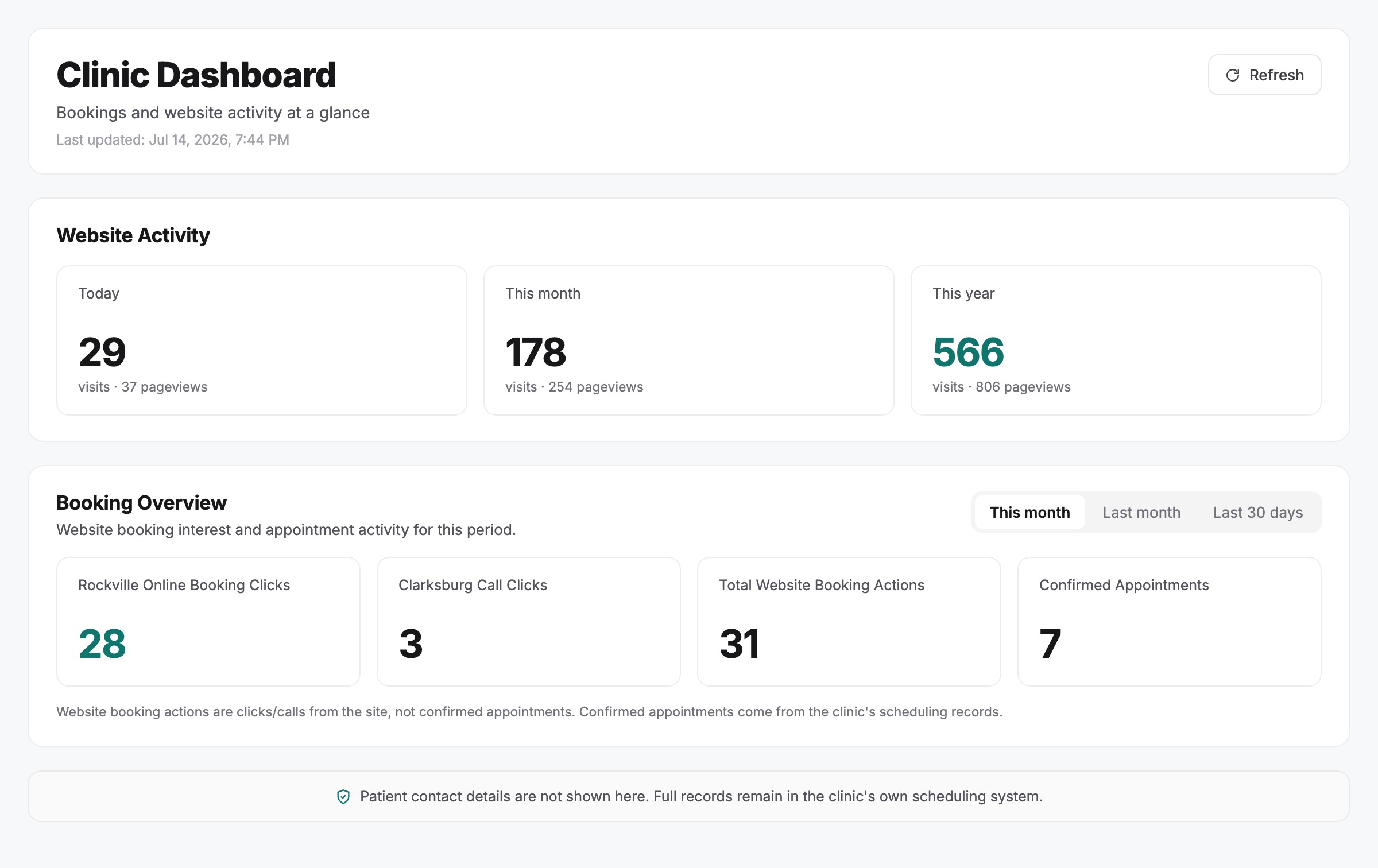
Aggregate outcomes only, no patient level data leaves the practice.
A message means someone still has to call back, and the patient who wanted a 9pm appointment is asleep by then. The Operator books the appointment while the patient is still motivated, on the real calendar, in the same call or message thread.
And because every action lands in a proof ledger, the practice can audit exactly what was booked, when, and for which location. Trust comes from the record, not from my word.
A second front desk hire runs $3,900 a month per location fully loaded, and still goes home at 5pm.
This practice runs on Operator: $3,000 implementation + $2,500/mo + usage, covering both locations plus nights, weekends, and holidays.
A typical example built from the wage math shown, not a figure for any specific business. Wage and benefit costs vary by role and location.
30 minutes. I will show you the live booking ledger from this case study and what the same system looks like pointed at your practice.
Prefer to read more first? See all client work